
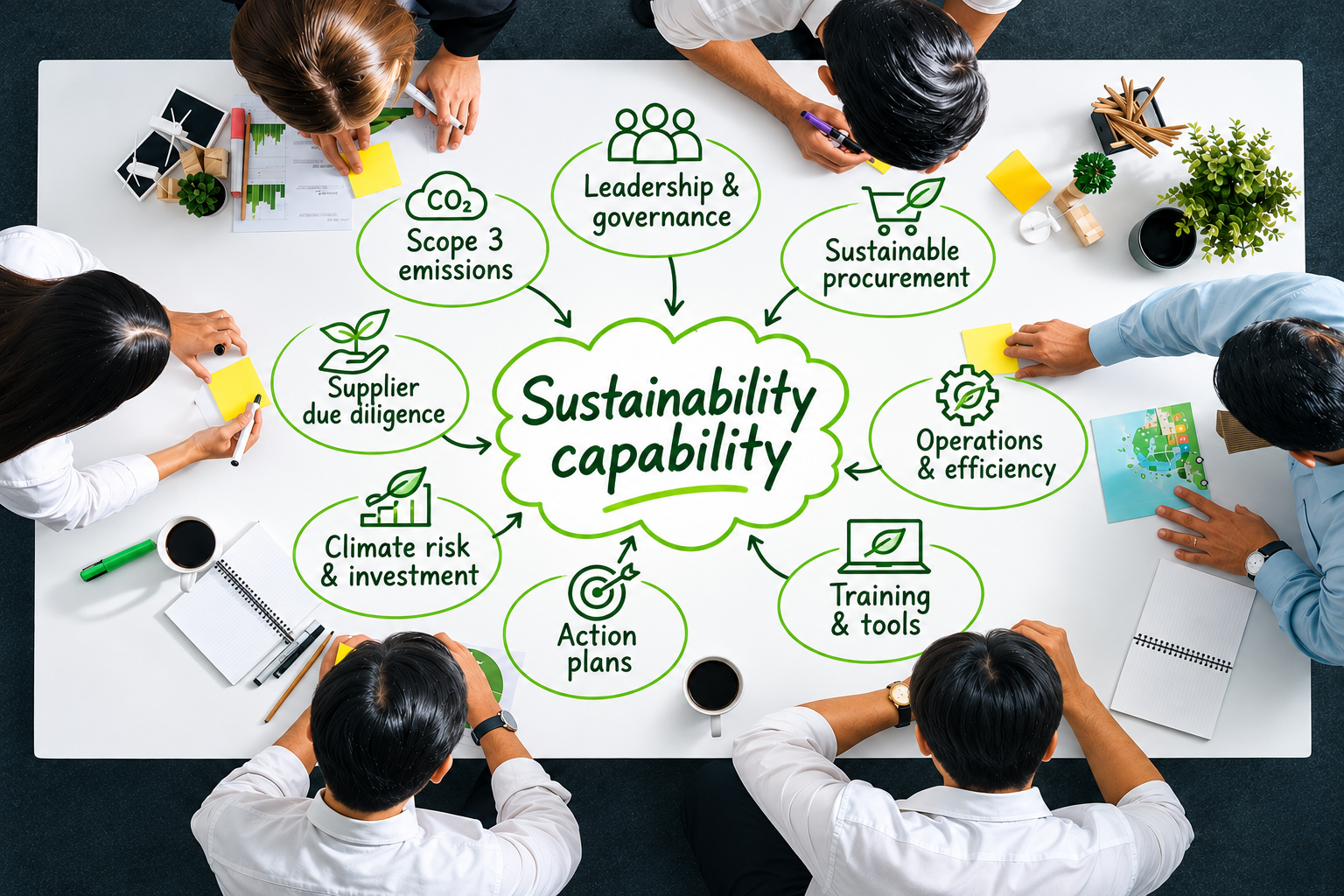
Most organisations don't have a shortage of people who understand that sustainability is important. What they often lack is people who know what to do about it. A procurement manager might understand the importance of Scope 3 emissions but not know how to evaluate supplier carbon data. An executive might recognise climate risk as a business priority but be unsure how to integrate it into investment decisions. And an operations manager might support the organisation's net zero target without knowing which actions will make the biggest difference.
That's the difference between sustainability awareness and sustainability capability.
Knowing isn't the same as doing
Sustainability strategies increasingly require action across the entire organisation. Procurement teams need to understand sustainable sourcing and supplier due diligence. Finance teams need to consider climate-related financial risks. Operations teams need to identify emissions reduction and resource efficiency opportunities. And leadership teams need to understand their governance responsibilities.
A sustainability team can provide direction and specialist expertise, but it can't make every decision. For sustainability to become business as usual, people need the skills, tools and confidence to act within their own roles.
Training needs to be designed around action
Too often, sustainability training focuses on explaining the problem rather than helping people do something about it. There's certainly a place for building awareness. But effective sustainability capability building needs to go further. That means designing training around the decisions participants need to make, the challenges they face and the actions they're expected to take.
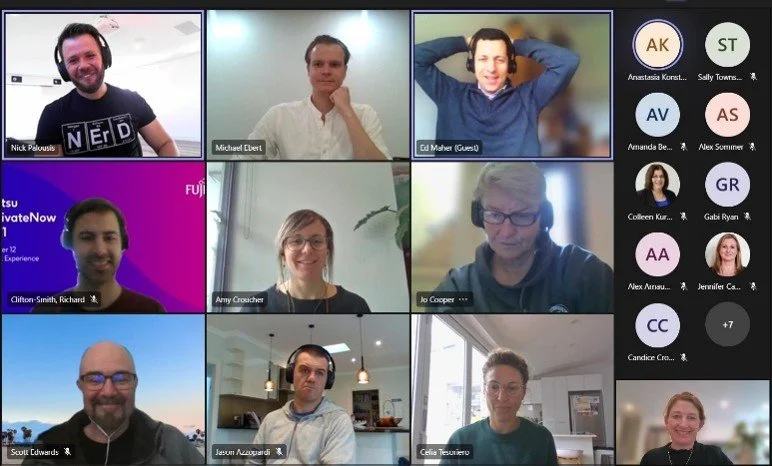
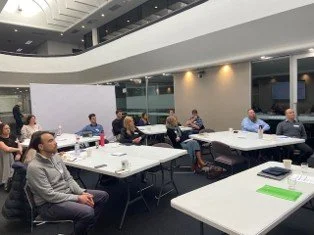
The NSW Government's Accelerate Zero program provides a useful example. Eighty20 and 2XE designed, developed and delivered the program, which combined e-learning with facilitated accelerator sessions to help organisations understand decarbonisation and translate that knowledge into practical action. The approach recognised that people need more than information. They need opportunities to explore challenges, apply concepts to their own operations and develop realistic pathways forward. The same principle applies to other sustainability training, from climate risk workshops and executive briefings to sustainable procurement and modern slavery training. The content needs to be relevant to the audience.
Different teams need different capabilities
Not everyone needs the same level of sustainability knowledge. A procurement team might benefit from practical training on supplier risk assessments, carbon data and responsible sourcing. A leadership team may need to understand climate risk, sustainability governance and the implications of mandatory reporting. An operational team might focus on identifying energy efficiency opportunities, reducing waste or implementing circular economy principles.
Tailoring training to specific roles makes it more relevant and easier to apply. It also helps organisations move beyond general sustainability awareness towards shared accountability for implementation.
Capability building doesn't end with a workshop
A single training session can introduce new ideas, but lasting change requires reinforcement. Practical tools, action plans, follow-up support and opportunities to apply learning all help embed new capabilities. Organisations also need to consider how sustainability knowledge is retained as people change roles or leave the business.
This is where a combination of workshops, e-learning, practical resources and ongoing specialist support can be particularly effective. The objective isn't to turn everyone into a sustainability expert. It's to make sure people have the knowledge and confidence to make better decisions.
Because sustainability becomes business as usual when people know what to do, why it matters and how to do it.
